

Introduction: Tesla Turns Vehicle Performance Into a Software Experience
Tesla has built its reputation around electric vehicle technology, but one of the company's most important innovations is not a physical component. It is the ability to continuously improve vehicle functions through software updates.
The company's latest summer software update introduces expanded traction control capabilities, demonstrating how modern electric vehicles are moving beyond traditional mechanical tuning.
In conventional vehicles, performance improvements often require hardware changes, dealership visits, or new vehicle generations. Tesla's approach allows certain driving characteristics to evolve through software, creating a different ownership experience.
Key Insight: Tesla's traction control update is not only about improving wheel grip. It represents a broader shift in the automotive industry where software increasingly determines vehicle performance, safety, and user experience.
What Is Tesla's New Traction Control Update?
Traction control is a fundamental vehicle safety technology designed to manage wheel slip and maintain stability during acceleration.
When a vehicle accelerates on surfaces with limited grip, such as wet roads, gravel, snow, or loose pavement, one or more wheels may spin faster than the vehicle is actually moving.
Traditional traction control systems reduce power output or apply braking force to individual wheels to restore stability.
Why Electric Vehicles Need Advanced Traction Management
Electric vehicles create unique challenges and opportunities for traction control because electric motors can deliver torque almost instantly.
Unlike gasoline engines that build power gradually through mechanical systems, electric motors can provide maximum torque immediately after the accelerator is pressed.
| Vehicle Type | Power Delivery Characteristics | Traction Control Challenge |
|---|---|---|
| Traditional Gasoline Vehicle | Power builds through engine RPM and transmission | Mechanical response limitations |
| Electric Vehicle | Instant electric motor torque | Requires faster electronic adjustment |
This means EV manufacturers must develop faster and more intelligent systems to control power delivery without reducing driving enjoyment.
The Technology Behind Tesla's Traction Control System
Tesla's traction management system combines information from multiple vehicle sensors, including wheel speed monitoring, motor control data, and vehicle dynamics measurements.
The vehicle continuously evaluates conditions and adjusts torque distribution to maintain stability.
Key Components Behind Modern EV Traction Control
- Wheel speed sensors: Monitor differences between wheel rotation speeds.
- Electric motor controllers: Adjust torque output within milliseconds.
- Vehicle stability systems: Analyze acceleration, steering, and movement patterns.
- Software algorithms: Process information and determine optimal power delivery.
The ability to improve these systems through software updates gives Tesla an advantage compared with traditional automotive development cycles.
Why Tesla's Software Update Strategy Matters
The automotive industry has historically followed a product cycle where improvements are introduced mainly through new model years.
Tesla has challenged this model by treating vehicles as connected technology platforms.
- Vehicle features can improve after purchase.
- Performance adjustments can be delivered remotely.
- Safety improvements can reach existing owners faster.
- Software becomes part of the ownership value.
Industry Impact: Tesla's approach is influencing traditional automakers to invest more heavily in connected vehicles, over-the-air updates, and software development capabilities.
How Tesla's Improved Traction Control Changes the Driving Experience
For many drivers, traction control is a feature they rarely think about until road conditions become challenging. However, in electric vehicles, especially high-performance models, intelligent torque management plays a major role in balancing acceleration, efficiency, and safety.
Tesla's latest traction control improvements focus on making power delivery smoother and more predictable across different driving environments.
Improved Performance on Wet and Slippery Roads
Wet roads are one of the most common situations where traction management becomes important. Water reduces tire contact with the road surface, making sudden acceleration more likely to cause wheel slip.
A faster electronic response allows the vehicle to adjust motor output more precisely instead of relying only on reducing power after wheel spin has already occurred.
Better Control During Performance Driving
Tesla vehicles are known for instant acceleration because of electric motor characteristics. While this provides strong performance, it also creates higher demands on traction systems.
Advanced traction software allows vehicles to deliver strong acceleration while maintaining stability and driver confidence.
| Driving Situation | Potential Benefit of Improved Traction Control |
|---|---|
| Rain and wet pavement | More stable acceleration and reduced wheel slip |
| Loose surfaces | Better torque adjustment on uneven grip conditions |
| Cold weather driving | Improved confidence when roads have reduced traction |
| Daily commuting | Smoother and more predictable vehicle behavior |
Tesla's Software-Defined Vehicle Strategy vs Traditional Automakers
The traction control update highlights a larger transformation happening across the automotive industry: vehicles are becoming software platforms.
Traditional automakers have historically focused on improving engines, transmissions, suspension systems, and other physical components. Tesla has placed greater emphasis on software integration and continuous improvement after purchase.
| Traditional Automotive Model | Tesla Software-Driven Model |
|---|---|
| Major improvements introduced with new vehicle generations | Continuous improvements through over-the-air updates |
| Hardware-focused engineering | Combination of hardware, software, and data |
| Limited post-sale feature changes | Vehicle capabilities can evolve after delivery |
This approach creates a new competitive environment where automotive companies must develop not only manufacturing expertise but also software engineering capabilities.
What Tesla Owners Should Know About Traction Control Updates
Software improvements can enhance vehicle performance, but they do not replace the importance of proper tires, maintenance, and responsible driving habits.
Traction control works together with physical components such as tires and suspension systems. Even the most advanced software cannot overcome the limitations of worn tires or unsafe driving conditions.
Owner Recommendation: Tesla drivers can maximize the benefits of advanced traction systems by maintaining proper tire pressure, selecting appropriate tires for seasonal conditions, and keeping vehicle software updated.
How Tesla Accessories Improve Everyday Driving Comfort and Protection
As Tesla vehicles receive more software improvements, owners are also looking for practical upgrades that improve daily usability.
Advanced vehicle technology focuses on performance and intelligence, while accessories help protect the vehicle and improve the ownership experience.
Future Outlook: How Software Will Define the Next Generation of Vehicles
Tesla's traction control update represents a broader transformation taking place across the automotive industry. The future competition between automakers will increasingly depend not only on batteries, motors, and manufacturing capacity, but also on software intelligence.
As electric vehicles become more connected, software will play a larger role in improving vehicle performance, safety, and user experience throughout the entire ownership lifecycle.
Vehicles Are Becoming Continuously Improving Technology Platforms
Traditional vehicles are mostly defined by the hardware installed at the factory. Once a vehicle leaves the production line, most capabilities remain unchanged.
Software-defined vehicles introduce a different approach. Manufacturers can improve vehicle functions through remote updates, allowing existing owners to receive new features without purchasing a new vehicle.
- Performance optimization: Software can adjust power delivery, energy efficiency, and driving characteristics.
- Safety improvements: Updated algorithms can improve vehicle response and driver assistance functions.
- User personalization: Drivers may receive customized driving settings based on preferences and usage patterns.
- New revenue opportunities: Software features can create subscription-based business models.
Artificial Intelligence Will Become a Core Automotive Technology
The development of advanced traction control systems is closely connected with the broader growth of artificial intelligence in vehicles.
Future vehicles will increasingly analyze information from sensors, cameras, and vehicle systems to make faster and more accurate decisions.
This shift means automotive companies will need expertise in software engineering, artificial intelligence, data processing, and cybersecurity in addition to traditional mechanical engineering.
Future Trend: The automotive industry is moving from a model where vehicles are completed products toward a model where vehicles continuously evolve through software updates.
Industry Impact: Why Tesla's Software Strategy Matters
Tesla's approach has influenced how the global automotive industry thinks about vehicle development.
Major automakers are now investing heavily in software platforms, connected vehicle systems, and over-the-air update technologies because future vehicle competitiveness will depend increasingly on digital capabilities.
| Industry Area | Expected Change |
|---|---|
| Vehicle Development | More focus on software architecture and electronic systems |
| Customer Experience | Vehicles receive improvements after purchase |
| Automotive Competition | Software capability becomes a key differentiator |
| Business Model | Growth of software services and digital features |
Challenges Facing Software-Defined Vehicles
Although software brings new opportunities, it also creates challenges for automakers and consumers.
- Cybersecurity risks: Connected vehicles require stronger protection against digital threats.
- Software reliability: Updates must be carefully tested to avoid unexpected issues.
- Consumer acceptance: Drivers must trust increasingly automated vehicle systems.
- Regulatory requirements: Governments must establish standards for emerging technologies.
The companies that succeed in the future automotive market will likely be those that can combine hardware reliability with software innovation.
Frequently Asked Questions
What is Tesla traction control and why is it important?
Tesla traction control is a system that manages electric motor power delivery to help maintain vehicle stability when road conditions reduce tire grip. It is especially important for electric vehicles because electric motors provide instant torque.
Can Tesla improve vehicle performance through software updates?
Yes. Tesla uses over-the-air software updates to improve certain vehicle functions, including performance adjustments, efficiency improvements, and driver assistance features. However, software updates cannot replace physical upgrades such as better tires or suspension components.
Why are software updates becoming important in electric vehicles?
Electric vehicles have powerful computing systems that allow manufacturers to improve vehicle functions after delivery. This creates a different ownership experience compared with traditional vehicles.
Does Tesla traction control make driving safer?
Advanced traction control can improve vehicle stability by managing wheel slip and power delivery. However, safe driving still depends on proper tires, road conditions, vehicle maintenance, and driver behavior.
What Tesla accessories can improve daily driving experience?
Accessories such as Tesla floor mats, mud guards, screen protectors, sunshades, and cabin air filters can improve vehicle protection, comfort, and convenience for everyday Tesla ownership.
Recommended for Tesla Pet Owners: Wigoo Dog Car Seat Cover for Back Seat
For Tesla owners who frequently travel with dogs, protecting the rear interior is an important part of long-term vehicle ownership. Electric vehicles often feature premium interiors with large rear seating areas, making it essential to prevent damage from pet hair, dirt, scratches, and moisture.
The Wigoo Dog Car Seat Cover for Back Seat is designed for SUV and truck owners who want a cleaner, more comfortable travel environment for both passengers and pets. It combines a durable protective surface with a structured design that helps create a safer space for dogs during road trips and daily driving. :contentReference[oaicite:1]{index=1}
- Full Back Seat Protection: Covers the seat surface, seatback, and side areas to help protect vehicle interiors from pet hair, scratches, mud, and spills.
- Waterproof and Easy Cleaning: The multi-layer material design helps prevent liquids from reaching the original seats and allows easier cleaning after outdoor adventures.
- Stable Hard Bottom Structure: The reinforced bottom design provides a more stable platform compared with traditional soft hammock-style covers, helping reduce sliding and discomfort for larger dogs.
- Large SUV Compatibility: Designed for SUVs and medium trucks, making it suitable for vehicles with spacious rear seating areas. :contentReference[oaicite:2]{index=2}
- Pet-Friendly Travel Design: Features such as breathable mesh visibility panels, seat belt compatibility, and storage pockets help improve comfort during longer journeys. :contentReference[oaicite:3]{index=3}
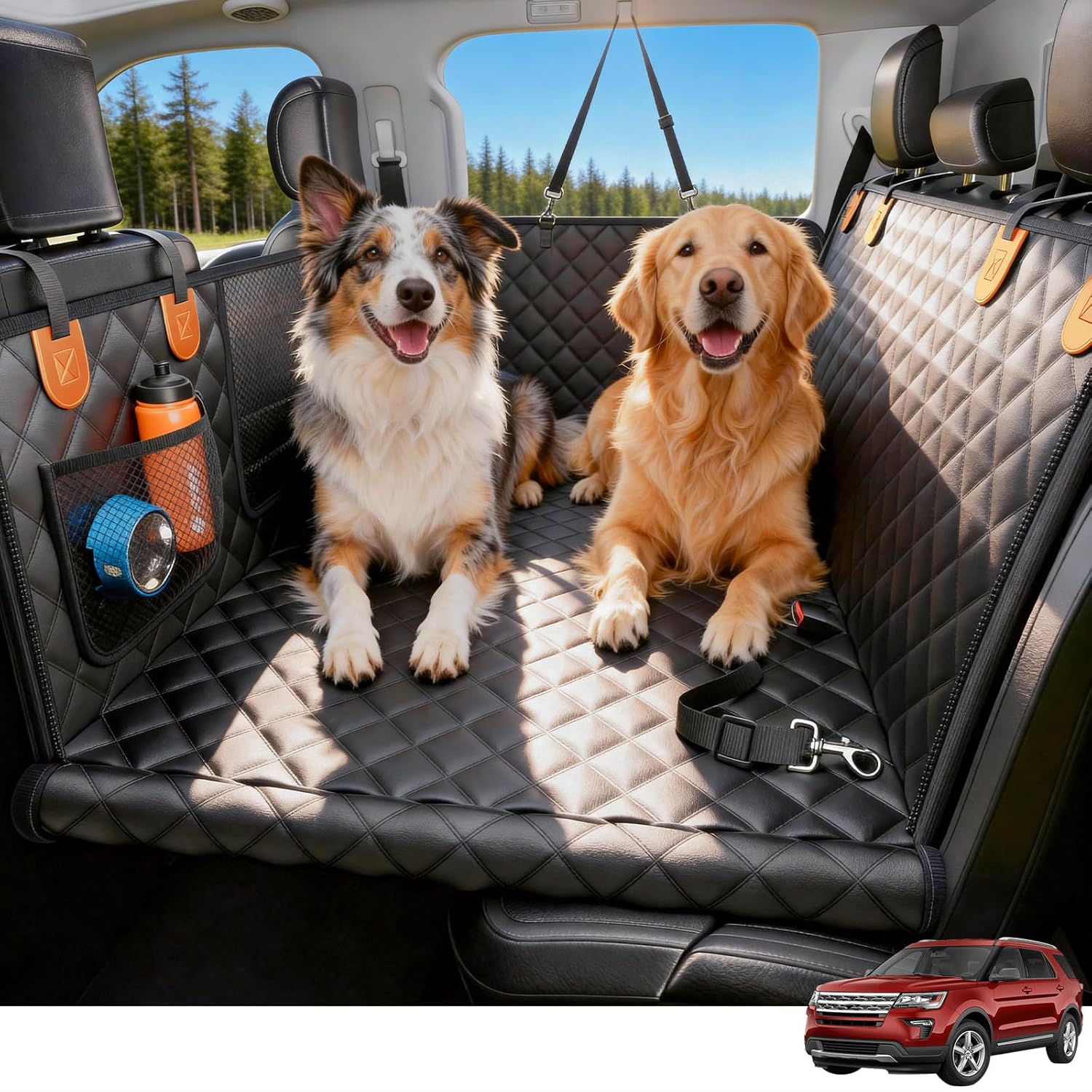
A practical interior protection solution for Tesla owners traveling with dogs and pets.
Why Tesla Owners Choose Pet Interior Protection
Tesla vehicles are designed around technology, comfort, and minimalist interiors. However, daily lifestyle use can create challenges that software improvements cannot solve, such as pet hair accumulation, muddy paws, and accidental scratches.
For families who combine electric vehicle ownership with outdoor activities, camping trips, or weekend adventures, a dedicated rear seat protection system can help maintain interior quality while making travel more convenient.
Best Use Cases:
Tesla Model Y owners, Tesla Model 3 owners with pets, SUV drivers, camping enthusiasts, and families who frequently travel with dogs can benefit from additional rear-seat protection.