

Tesla Expands Model Y Beyond the Traditional SUV Formula
Tesla’s Model Y has become one of the most influential electric vehicles worldwide, combining crossover practicality with the efficiency advantages of an EV platform. However, as the electric vehicle market matures, consumer expectations are changing. Buyers are increasingly looking for vehicles that provide not only long range and advanced software, but also greater flexibility for families, passengers, and daily transportation needs.
The introduction of the Tesla Model Y L represents an important shift in Tesla’s product strategy. Instead of focusing only on improving performance or battery technology, Tesla is extending the Model Y platform into a larger passenger-oriented format designed to compete in the expanding electric three-row SUV market.
According to reports from EV industry publications, the Model Y L has attracted attention because it combines the familiar Model Y architecture with additional interior capacity, creating a vehicle positioned between a compact crossover and a larger family SUV.
This move reflects a broader industry trend: electric vehicle manufacturers are increasingly adapting existing platforms to serve different customer segments rather than relying only on completely new vehicle launches.
Tesla Model Y L: Why a Larger Model Y Matters
The Growing Demand for Electric Family SUVs
The global automotive market has experienced a significant shift toward SUVs over the past decade. Consumers increasingly prefer higher seating positions, flexible cargo space, and vehicles that can support multiple lifestyles.
The same trend is now influencing electric vehicle adoption. While early EV buyers often prioritized technology and environmental benefits, mainstream customers are asking practical questions:
- Can the vehicle comfortably carry a family?
- Does it provide enough storage space for daily activities?
- Can it replace a traditional gasoline SUV?
- Does it remain efficient despite a larger body size?
Tesla’s response with the Model Y L addresses these practical concerns by expanding one of its strongest-selling platforms rather than introducing a completely separate vehicle line.
A Strategic Extension of Tesla’s Best-Selling Platform
The original Model Y has played a central role in Tesla’s global growth. Built on the same general architecture as the Model 3, the Model Y combines manufacturing efficiency with strong consumer demand.
Rather than developing a new electric minivan or a larger SUV from the ground up, Tesla’s approach appears focused on maximizing the value of an established platform.
Industry Perspective: Expanding an existing vehicle platform can reduce development complexity, improve manufacturing efficiency, and allow automakers to respond faster to changing consumer preferences.
Tesla’s Sales Momentum and the Role of Model Y L
Tesla’s recent sales performance demonstrates the continued importance of the Model Y family within the company’s global business. While competition in the EV sector has intensified, Tesla continues to rely heavily on its high-volume models to maintain market presence.
Industry analysts have noted that expanding the Model Y lineup could help Tesla reach additional customer groups, especially buyers who previously considered larger gasoline SUVs because of passenger capacity requirements.
| Vehicle Segment | Traditional Buyer Need | Tesla Response |
|---|---|---|
| Compact EV SUV | Efficiency and daily commuting | Model Y |
| Family EV SUV | More passengers and flexible space | Model Y L |
| Premium electric SUV | Luxury and larger dimensions | Model X segment |
Model Y L Design Philosophy: Making Tesla More Practical for Families
From Performance-Focused EV to Everyday Family Transportation
Tesla’s early success was built around proving that electric vehicles could deliver impressive acceleration, advanced software features, and long-distance capability. However, as EV adoption moves into the mainstream market, the priorities of buyers are evolving.
For many families, the decision to purchase an electric vehicle is no longer only about battery range or acceleration. Interior usability, passenger comfort, cargo flexibility, and ownership convenience have become equally important factors.
The Model Y L reflects this transition. By increasing passenger capacity while maintaining the core advantages of the Model Y platform, Tesla is attempting to attract buyers who previously may have chosen larger gasoline-powered SUVs or three-row crossovers.

The expanded cabin layout allows Tesla to compete in the growing family electric SUV category.
Six Seats Instead of a Traditional Three-Row Layout
One of the defining characteristics of the Model Y L is its six-seat configuration. Instead of using a simple bench-style third row, Tesla has focused on a layout designed to improve individual passenger access and comfort.
A six-seat arrangement can offer several advantages for families:
- Improved second-row accessibility: Individual seats can make entering the rear area easier compared with a traditional fixed bench.
- Better passenger separation: Families with children may find individual seating positions more practical for longer trips.
- Flexible interior usage: The cabin can support different combinations of passengers and cargo.
However, this approach also involves compromises. A six-seat configuration may not provide the same maximum passenger capacity as some traditional seven-seat SUVs. The value proposition depends on whether buyers prioritize comfort and usability over the highest possible seating count.
Why Tesla Chose to Expand Model Y Instead of Creating a New SUV
Manufacturing Efficiency Behind Tesla’s Platform Strategy
Developing a completely new vehicle requires significant investment in engineering, production equipment, supply chains, and manufacturing processes. Automakers traditionally spend billions of dollars bringing new platforms to market.
Tesla’s approach has often focused on improving existing platforms and increasing production efficiency. The Model Y L follows this philosophy by extending an established vehicle architecture instead of introducing an entirely separate SUV model.
This strategy may provide several advantages:
- Lower development complexity compared with a new vehicle platform.
- Greater parts commonality with existing Model Y production.
- Faster response to changing consumer demand.
- Potential manufacturing advantages through existing supply chain relationships.
Expert Analysis: In the current EV market, platform flexibility has become a major competitive advantage. Automakers that can adapt existing architectures quickly may respond faster to changing customer preferences.
The Competitive Landscape: Tesla Enters a More Crowded Family EV Market
The electric SUV segment has become increasingly competitive. Traditional automakers and emerging EV companies are introducing larger electric crossovers designed specifically for families.
Tesla’s challenge is no longer proving that EV technology works. The challenge is maintaining differentiation as competitors offer similar combinations of range, technology, and practicality.
| Market Segment | Customer Priority | Tesla Model Y L Position |
|---|---|---|
| Compact Electric SUV | Efficiency, price, daily driving | Expanded Model Y platform |
| Three-row Electric SUV | Family transportation and space | Model Y L targets this segment |
| Luxury Electric SUV | Premium materials and maximum comfort | Above Model Y range |
How Competitors Are Changing the EV Market
Companies including established global automakers and newer EV manufacturers have increased investment in electric SUVs. Many of these vehicles focus heavily on interior space, premium features, and family-oriented design.
This creates a different competitive environment for Tesla. The company’s previous advantage came from limited competition in the EV space. Today, buyers have more choices.
The Model Y L therefore serves an important strategic purpose: it allows Tesla to defend its position in a category where practical usability is becoming a key purchasing factor.
Consumer Impact: Who Is the Model Y L Designed For?
Families Looking to Replace Gasoline SUVs
Many households considering an EV are not comparing electric vehicles against other EVs. Instead, they are comparing them against gasoline-powered SUVs they already understand.
For these buyers, the biggest questions are practical:
- Can children comfortably access the rear seats?
- Is there enough cargo room for daily activities?
- Can the vehicle handle road trips?
- Will charging be convenient?
The Model Y L addresses these concerns by focusing on usability rather than only technology specifications.
Existing Tesla Owners May Also See Value
Some current Model 3 and Model Y owners eventually face a common challenge: their families grow, but they still prefer Tesla’s software ecosystem and charging network.
A larger Model Y variant provides a potential upgrade path for those customers without requiring them to move to a completely different automotive brand.
Consumer Perspective: The success of Model Y L will depend less on specifications alone and more on whether families believe it can replace the convenience of traditional SUVs in everyday life.
Technical Analysis: Why the Model Y L Achieves Higher Efficiency
The introduction of the Tesla Model Y L represents more than an expansion of vehicle size. It demonstrates Tesla’s continued focus on improving efficiency through engineering optimization rather than simply increasing battery capacity.
Traditional three-row electric SUVs often face a difficult trade-off: adding passenger space usually increases vehicle weight, aerodynamic drag, and energy consumption. Tesla’s approach with the Model Y L focuses on reducing these penalties through multiple engineering improvements.
Tesla’s efficiency strategy is based on optimizing the entire vehicle system — including aerodynamics, drivetrain efficiency, thermal management, software control, and energy recovery — rather than relying only on a larger battery pack.
Aerodynamic Optimization Becomes More Important in Larger EVs
For electric vehicles, aerodynamic performance directly affects driving range, especially at highway speeds. Unlike gasoline vehicles, where engine efficiency varies significantly across driving conditions, EV energy consumption is strongly influenced by air resistance.
Tesla has historically invested heavily in reducing drag coefficients across its lineup. The Model S, Model 3, Model Y, and Cybertruck all reflect different approaches to balancing practicality with aerodynamic performance.
With the Model Y L, Tesla needed to increase cabin volume while minimizing the efficiency loss normally associated with a longer body design.
| Engineering Area | Impact on EV Efficiency |
|---|---|
| Body Shape Optimization | Reduces aerodynamic resistance during highway driving |
| Vehicle Software Control | Improves energy usage through intelligent power management |
| Thermal System Improvements | Maintains battery efficiency across different conditions |
Battery Efficiency Instead of Simply Increasing Battery Size
One of the challenges facing larger electric SUVs is the temptation to solve range concerns by installing a much larger battery pack. However, bigger batteries increase vehicle weight, material costs, and manufacturing complexity.
Tesla’s product strategy has generally focused on improving energy efficiency first. A vehicle that consumes less energy per mile can achieve competitive range without requiring excessive battery capacity.
This approach is particularly important as the global EV market enters a more mature phase. Automakers are increasingly looking beyond early EV adoption and focusing on improving affordability, efficiency, and manufacturing scalability.
Why Tesla Created the Model Y L: Market Strategy Behind the Larger SUV
The development of the Model Y L reflects changing consumer preferences in major automotive markets.
SUVs and crossovers have become dominant segments in many regions because buyers increasingly want flexible interior space without moving to traditional large vehicles such as full-size SUVs or minivans.
A longer-wheelbase Model Y allows Tesla to compete in a market segment where families often prioritize:
- Additional third-row seating capability
- More passenger comfort on longer trips
- Greater cargo flexibility
- Premium technology features

Tesla Model Y L targets growing demand for larger electric family vehicles.
The Growing Three-Row EV Competition
Tesla is entering a segment that is becoming increasingly competitive. Global automakers are expanding their electric SUV portfolios as consumer demand shifts toward larger vehicles.
Competitors include electric SUVs from established manufacturers such as Hyundai, Kia, Mercedes-Benz, BMW, Volkswagen, and other EV-focused brands.
The challenge for Tesla is not only creating a larger vehicle but maintaining the advantages that helped the Model Y become one of the world's most recognized EV products.
| Vehicle Segment | Consumer Priority | Tesla Strategy |
|---|---|---|
| Compact EV SUV | Efficiency and affordability | Model Y |
| Three-row electric SUV | Family practicality | Model Y L |
| Luxury EV SUV | Premium experience | Model X |
Industry Impact: What the Model Y L Means for Tesla and the EV Market
Impact on Tesla’s Product Portfolio
The Model Y L helps Tesla expand its product range without developing an entirely new vehicle platform.
Using an existing architecture allows Tesla to reduce development costs, simplify manufacturing, and potentially improve production efficiency compared with creating a completely separate SUV model.
This approach follows Tesla’s broader strategy of platform reuse, where engineering improvements can be applied across multiple vehicles.
Impact on Consumers
For families considering an electric vehicle, the biggest change is increased flexibility.
Many EV buyers previously faced compromises between choosing a smaller, efficient crossover or a larger vehicle with more passenger capacity.
The Model Y L attempts to close that gap by combining:
- Electric drivetrain advantages
- Advanced software features
- Three-row usability
- Lower operating costs compared with traditional gasoline SUVs
Impact on Tesla Accessories and Aftermarket Demand
As Tesla expands into larger family-oriented vehicles, demand for practical accessories is also expected to grow.
Owners of larger EVs often look for products that improve daily usability, including:
- Interior organization solutions
- Phone mounting systems
- Storage accessories
- Lighting upgrades
- Protection products
As EV ownership becomes more mainstream, buyers increasingly treat electric vehicles as long-term lifestyle products rather than simply transportation tools.
Future Outlook: Where Tesla’s SUV Strategy May Go Next
The Model Y L could become an important step in Tesla’s broader vehicle expansion strategy.
The company has historically focused on fewer models with large production volumes. Expanding successful platforms into additional configurations allows Tesla to serve more customer segments without dramatically increasing manufacturing complexity.
Possible Future Developments
- More regional vehicle configurations
- Further efficiency improvements through software updates
- Expanded family-oriented EV designs
- Greater integration between vehicles and autonomous driving technology
However, Tesla also faces several challenges. Larger vehicles typically require more materials, may have higher production costs, and operate in a market where competition continues to increase.
Frequently Asked Questions
What is the Tesla Model Y L?
The Tesla Model Y L is a larger version of the Model Y designed to provide increased interior space and additional passenger capacity while maintaining Tesla’s electric vehicle efficiency approach.
Why did Tesla create a longer Model Y?
Tesla introduced the Model Y L to address growing demand for larger electric SUVs, especially among families who need more seating flexibility and cargo space.
Is the Model Y L more efficient than traditional three-row SUVs?
Electric vehicles generally have higher drivetrain efficiency than gasoline SUVs. The Model Y L applies Tesla’s aerodynamic and software-focused engineering methods to reduce energy consumption.
Will the Model Y L replace the Model X?
The Model Y L and Model X target different customers. The Model X remains Tesla’s premium SUV, while the Model Y L focuses more on mainstream family practicality.
How could the Model Y L affect future Tesla vehicles?
The vehicle demonstrates Tesla’s strategy of expanding existing platforms into new market segments, which could influence future EV product development.
Conclusion: Tesla Model Y L Shows the Next Stage of EV Evolution
The Tesla Model Y L represents an important shift in the electric vehicle market. Instead of competing only through battery capacity or performance numbers, Tesla is focusing on solving a practical challenge: how to make electric vehicles more useful for larger families while maintaining efficiency.
The introduction of a larger Model Y configuration reflects broader changes in consumer expectations. EV buyers are increasingly looking for vehicles that fit everyday lifestyles, including family transportation, road trips, cargo flexibility, and long-term ownership value.
From an engineering perspective, the Model Y L demonstrates how Tesla continues to optimize vehicle efficiency through a combination of software, manufacturing experience, aerodynamic design, and energy management systems.
The success of the Model Y L will depend not only on vehicle specifications but also on Tesla’s ability to balance efficiency, affordability, practicality, and competition in an increasingly crowded electric SUV market.
For consumers, the Model Y L provides another option between compact electric crossovers and premium large SUVs. For Tesla, it represents a strategic expansion of one of its most important vehicle platforms.
As the EV industry moves into a more competitive phase, manufacturers will increasingly compete on complete ownership experiences — including comfort, software, charging ecosystem, accessories, and daily usability.
Recommended Tesla Accessories for Model Y Owners
As Tesla vehicles become more integrated into daily life, many owners choose practical accessories to improve convenience, organization, and driving comfort.
One common upgrade among Tesla drivers is a dedicated phone mounting solution. Because Tesla interiors rely heavily on the central touchscreen, a secure and accessible smartphone holder can improve navigation visibility and daily usability.
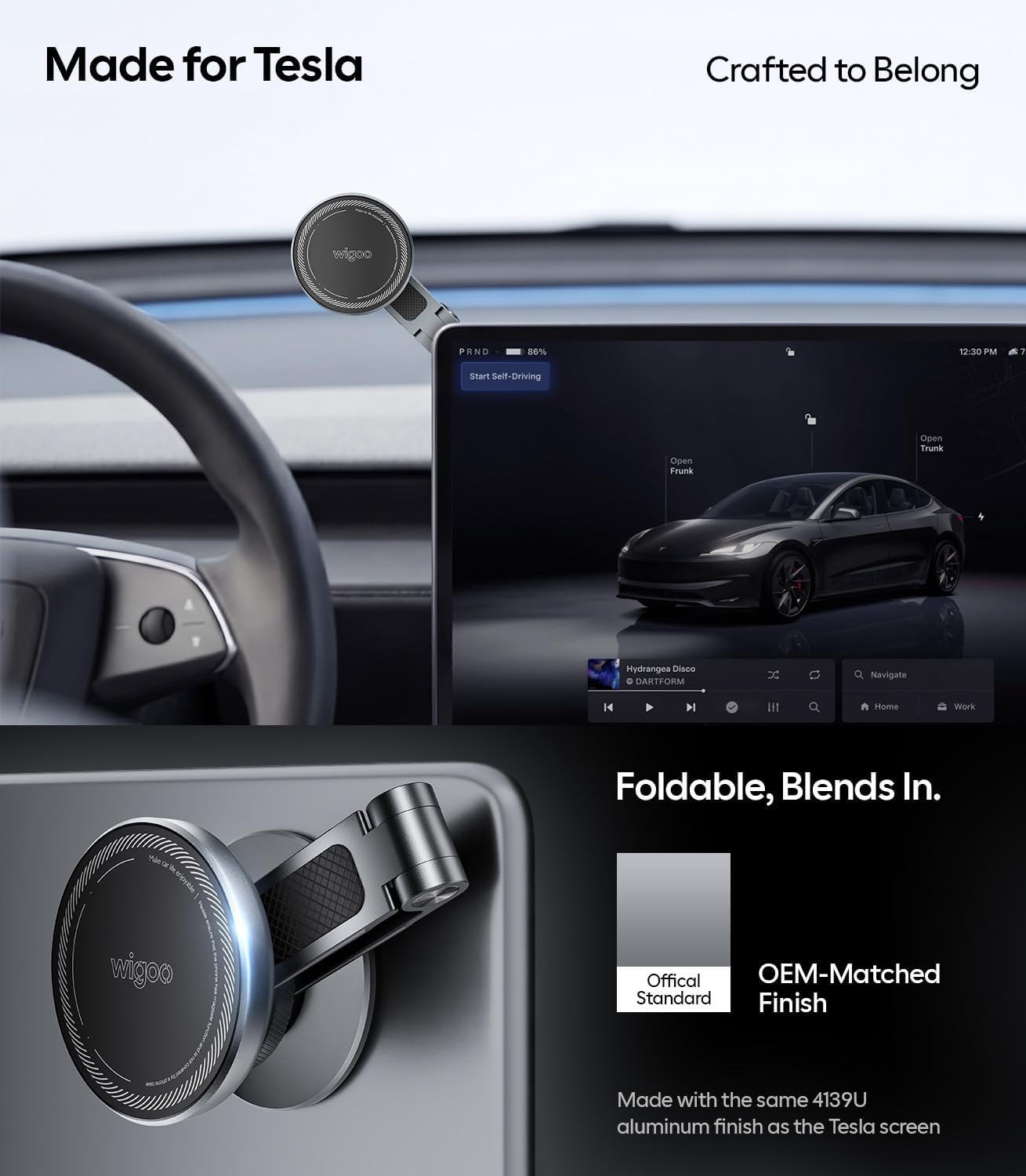
Wigoo magnetic phone mount designed for Tesla Model Y and Model 3 interiors.
Wigoo Tesla Phone Mount: OEM Style Design for Daily Driving
For Tesla owners looking for a clean interior upgrade, the Wigoo Tesla Phone Mount offers an OEM-style design with a hidden installation approach that matches the minimalist Tesla cabin.
The mount is designed for Tesla Model Y and Model 3 owners who want a stable smartphone position without adding bulky accessories that interfere with the vehicle’s interior design.
- Strong magnetic holding system for compatible smartphones
- 360-degree rotation for flexible viewing angles
- Foldable hidden design to maintain a clean dashboard appearance
- Compatible with MagSafe iPhone models
- Designed for Tesla Model Y and Model 3 interiors
Tesla vehicles are built around simplicity and digital interaction. Well-designed accessories can enhance usability while preserving the original minimalist cabin experience.
Learn more about the Wigoo Tesla phone mount:
Wigoo Tesla Model 3 & Model Y Phone Mount – OEM Style Magnetic Holder